
25 Best Golf Tips for Beginners to Improve Faster
Golf is one of the most rewarding sports in the world, but it can also be one of the most challenging to learn. Many beginners become frustrated because they expect quick results, only to discover that golf requires patience, consistency, and practice.
The good news is that every great golfer started as a beginner. By focusing on the right fundamentals and avoiding common mistakes, you can improve much faster than most new players.
Whether you’re picking up a club for the first time or trying to break 100 consistently, these 25 golf tips will help you build confidence, improve your technique, and enjoy the game more.
Why Beginners Struggle with Golf
Before diving into the tips, it’s important to understand why golf feels difficult initially.
Common beginner challenges include:
- Inconsistent swings
- Poor contact with the ball
- Lack of course management
- Overcomplicated techniques
- Unrealistic expectations
The key is to focus on simple improvements rather than perfection.
- Golf Setup Fundamentals
- Golf Swing Tips for Beginners
- Short Game Tips
- Golf Course Management Tips
- Practice Tips for Faster Improvement
- Common Beginner Golf Mistakes
- Sample Weekly Practice Plan
- How Long Does It Take to Improve at Golf?
- Essential Golf Equipment for Beginners
- Final Thoughts
- Frequently Asked Questions (FAQs)
Golf Setup Fundamentals
1. Learn the Proper Golf Grip
Your grip is the foundation of every golf shot.
A proper grip helps you:
- Control the clubface
- Improve accuracy
- Generate more power
Beginner Tip
Hold the club firmly but not too tightly. A grip that’s too strong can create tension and reduce swing speed.
2. Focus on Your Stance
A balanced stance helps create a stable swing.
Basic Stance Checklist
- Feet shoulder-width apart
- Slight knee flex
- Relaxed posture
- Weight evenly distributed
A strong stance promotes consistency.
3. Maintain Good Posture
Poor posture often leads to poor shots.
Proper Golf Posture
- Bend from the hips
- Keep your back relatively straight
- Let your arms hang naturally
Good posture allows the club to move freely throughout the swing.
4. Align Yourself Correctly
Many beginners aim incorrectly without realizing it.
Alignment Tip
Use a club on the ground during practice to ensure your feet, hips, and shoulders are aimed toward your target line.
5. Keep Your Head Steady
Trying to watch the ball fly immediately after impact often causes mishits.
Instead:
- Stay balanced
- Keep your head relatively still
- Finish your swing before looking up
Golf Swing Tips for Beginners
6. Start with Half Swings
Many beginners swing too hard.
Why Half Swings Help
Half swings improve:
- Ball contact
- Balance
- Timing
Mastering shorter swings builds a strong foundation.
7. Focus on Rhythm, Not Power
Power comes from technique, not brute strength.
Better Approach
Think:
- Smooth
- Controlled
- Balanced
A smooth swing often travels farther than an aggressive swing.
8. Finish Every Swing
Your follow-through affects the entire swing motion.
Good Finish Position
- Balanced
- Facing the target
- Weight on your lead foot
A proper finish usually indicates a proper swing.
9. Don’t Overswing
Trying to hit the ball too hard often creates:
- Slices
- Hooks
- Poor contact
Focus on solid contact first.
Distance will come naturally.
10. Practice Consistent Tempo
Most professional golfers have smooth swing tempos.
Tempo Tip
Count mentally:
- One (backswing)
- Two (downswing)
This promotes better rhythm.
Short Game Tips
11. Spend More Time Practicing Putting
Putting accounts for a large percentage of total strokes.
Practice Recommendation
Spend at least 40% of practice time on putting.
Improved putting quickly lowers scores.
12. Master Short Putts
Three-foot putts should become automatic.
Practice Drill
Place balls around the hole in a circle and make each putt consecutively.
13. Learn Basic Chipping
A strong short game saves strokes.
Chipping Fundamentals
- Narrow stance
- Weight forward
- Minimal wrist action
Consistency matters more than distance.
14. Use Different Clubs Around the Green
Experiment with:
- Pitching wedge
- Gap wedge
- Sand wedge
- 9-iron
Different situations require different shots.
15. Practice Distance Control
Many beginners focus only on direction.
Distance control is equally important, especially when putting.
Golf Course Management Tips
16. Play Smart Golf
Don’t always aim for difficult shots.
Beginner Strategy
Choose the safer option whenever possible.
Avoid unnecessary risks.
17. Aim for the Center of the Green
Many golfers attack flags unnecessarily.
The center of the green is usually the safest target.
18. Avoid Hero Shots
Trees, bunkers, and hazards often tempt golfers into risky recovery attempts.
Better Option
Take the safe shot and keep the ball in play.
19. Learn from Every Round
After each round, ask:
- What worked?
- What didn’t?
- Where did I lose strokes?
Improvement starts with self-awareness.
20. Keep Expectations Realistic
Golf is a difficult game.
Focus on gradual progress rather than immediate perfection.
Practice Tips for Faster Improvement
21. Practice with Purpose
Don’t simply hit balls.
Instead, create goals for each practice session.
Example Goals
- Improve alignment
- Work on putting
- Practice bunker shots
Purposeful practice leads to faster improvement.
22. Track Your Progress
Keep notes on:
- Fairways hit
- Greens reached
- Putts per round
Tracking performance helps identify weaknesses.
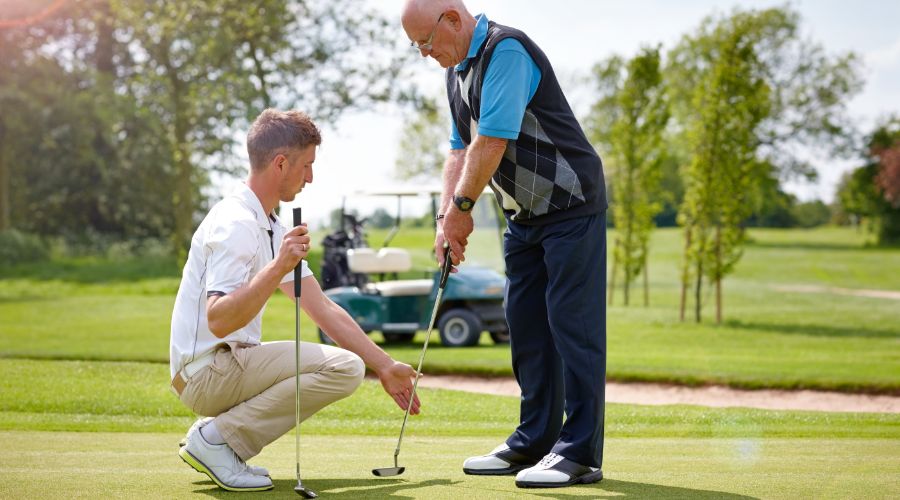
23. Take Lessons if Possible
A qualified instructor can:
- Identify flaws
- Speed up learning
- Prevent bad habits
Even a few lessons can make a huge difference.
24. Practice Consistently
One practice session per month won’t create improvement.
Ideal Schedule
- Practice 2–3 times weekly
- Play at least once weekly
Consistency beats intensity.
25. Enjoy the Learning Process
Golf improvement takes time.
The players who improve fastest are usually those who enjoy the journey rather than obsessing over scores.
Stay patient and celebrate small victories.
Common Beginner Golf Mistakes
Swinging Too Hard
Power comes from technique, not effort.
Buying Expensive Equipment Too Soon
Focus on skill development before investing heavily.
Ignoring the Short Game
Most strokes are saved around the green.
Comparing Yourself to Experienced Golfers
Everyone progresses at their own pace.
Practicing Only Drivers
Drivers are fun, but putting and chipping lower scores.
Sample Weekly Practice Plan
Monday
Putting Practice
30 minutes.
Wednesday
Driving Range Session
Focus on alignment and ball striking.
Friday
Short Game Practice
Chipping and pitching.
Weekend
Play a Full Round
Apply what you’ve learned.
How Long Does It Take to Improve at Golf?
Improvement depends on:
- Practice frequency
- Quality instruction
- Consistency
- Athletic background
Most beginners notice significant improvements within:
- 3–6 months of regular practice
- 6–12 months of dedicated learning
Patience is essential.
Essential Golf Equipment for Beginners
Golf Clubs
Start with a beginner-friendly set.
Recommended Clubs
- Driver
- Fairway wood
- Hybrid
- Irons
- Pitching wedge
- Putter
Golf Balls
Choose affordable balls while learning.
Losing balls is part of the process.
Golf Glove
A glove improves grip and comfort.
Golf Bag
Choose a lightweight bag that’s easy to carry.
Final Thoughts
Golf can seem overwhelming at first, but improvement comes faster when you focus on the fundamentals. By mastering your grip, stance, alignment, and short game while practicing consistently, you’ll see steady progress over time.
These 25 golf tips for beginners provide a roadmap to becoming a more confident and capable golfer. Remember that every golfer—even the professionals—continues learning and refining their skills.
Stay patient, enjoy the process, and celebrate every improvement along the way. The more you practice smartly and consistently, the faster you’ll lower your scores and enjoy the game.
Frequently Asked Questions (FAQs)
What is the best golf tip for beginners?
Developing a proper grip and focusing on consistent ball contact are among the most important beginner fundamentals.
How often should beginners practice golf?
Two to three practice sessions per week combined with regular rounds is ideal.
Should beginners focus on distance?
No. Accuracy and consistency are more important than distance initially.
How can I lower my golf score quickly?
Improve your putting and short game, as these areas impact scoring the most.
Are golf lessons worth it for beginners?
Yes. Professional instruction can help eliminate bad habits and accelerate improvement.
Leave a Reply